Ready to buy? Check current prices on Amazon and compare deals before you decide.
Navigating perimenopause often involves a complex array of hormonal fluctuations that can bring about various experiences. Many women seek information on natural approaches to support their well-being during this transitional phase.
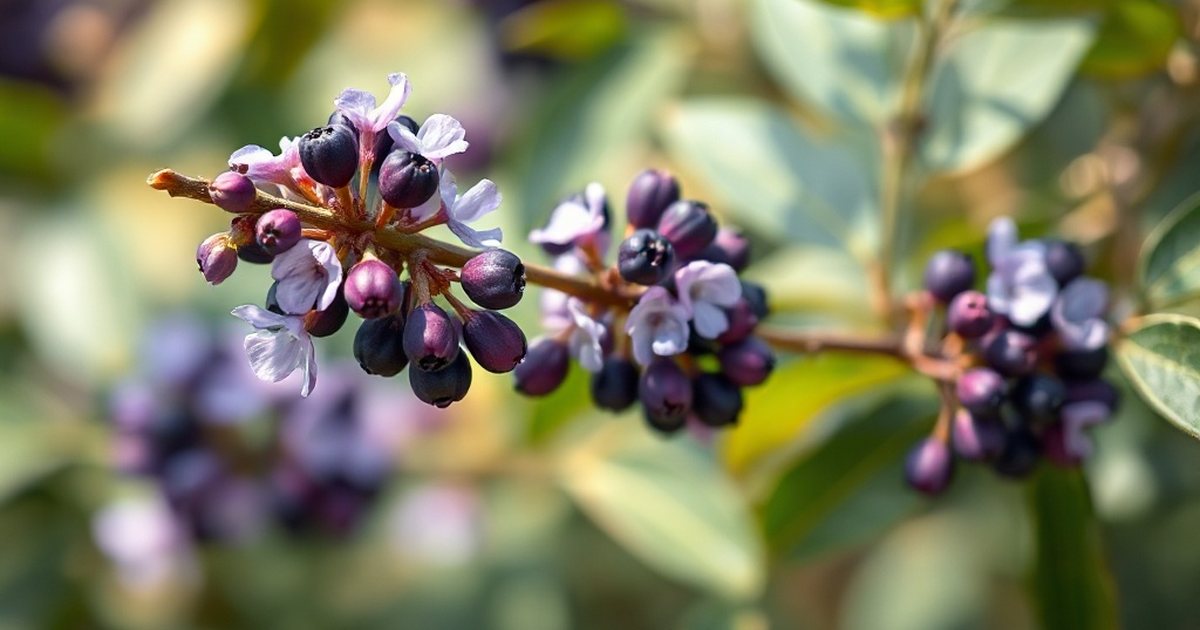
Vitex agnus-castus, also known as chasteberry, is a botanical that has garnered interest for its potential role in influencing specific hormone levels. This article explores the current understanding of how vitex may interact with prolactin and progesterone, particularly during the hormonal shifts characteristic of perimenopause.
Understanding Perimenopausal Hormonal Changes
Perimenopause is the transitional period leading up to menopause, marked by significant shifts in reproductive hormones. While estrogen often receives much attention, progesterone and prolactin also play crucial roles in the menstrual cycle and overall hormonal balance.
During perimenopause, ovarian function can become more erratic, leading to fluctuations in progesterone production. This can sometimes result in cycles where ovulation doesn’t occur, impacting progesterone levels. Understanding these natural shifts is key to considering how botanicals might offer support.
Vitex and Prolactin: A Closer Look
Vitex has long been studied for its potential influence on prolactin, a hormone produced by the pituitary gland. Prolactin is primarily known for its role in lactation, but elevated levels outside of pregnancy and breastfeeding can sometimes be associated with menstrual cycle irregularities.
Some research suggests that vitex may exert a dopaminergic effect, which could contribute to a reduction in prolactin release. This mechanism is thought to be a key way vitex might support hormonal balance, particularly in contexts where elevated prolactin is a factor. However, it’s important to note that the extent and consistency of this effect can vary among individuals and study designs.
That dopaminergic account has been measured directly, not only inferred. Working with the standardised vitex extract Ze 440, researchers tracked the activity through HPLC microfractionation and a cAMP assay in cells overexpressing the human D2 receptor, then isolated individual diterpenes and ranked their potency: viteagnusin I and rotundifuran were active, while vitexilactone was not[1]. A 2023 review of vitex in hyperprolactinaemia describes the same postulated mechanism, diterpenes activating pituitary D2 receptors and thereby inhibiting prolactin release, while noting that no large randomised trials yet support its clinical use for that indication[2].
Exploring Vitex’s Relationship with Progesterone
Progesterone is vital for maintaining the uterine lining and is produced after ovulation. In perimenopause, irregular ovulation can lead to lower or fluctuating progesterone levels, which some refer to as ‘estrogen dominance’ – though this term is often used broadly and not always clinically precise.
The proposed mechanism by which vitex might support progesterone levels is often linked to its potential influence on prolactin. By potentially moderating prolactin, vitex may indirectly support the healthy functioning of the corpus luteum, the structure that produces progesterone after ovulation. A more balanced prolactin environment is thought to be conducive to optimal luteal phase function and thus, progesterone production. However, direct evidence of vitex significantly raising progesterone levels across all perimenopausal women is not consistently demonstrated in all research.
The closest direct evidence comes from a different population. A randomised, double-blind, placebo-controlled study enrolled 52 women with luteal phase defects attributed to latent hyperprolactinaemia and evaluated 37 of them after three months; prolactin release fell, shortened luteal phases were normalised and deficits in luteal progesterone synthesis were eliminated, with those changes occurring only in the group receiving vitex[3]. Those women were not perimenopausal, which is exactly why the result cannot simply be read across to this page’s subject. A systematic review of randomised trials of vitex extracts found the trial literature concentrated on premenstrual syndrome, premenstrual dysphoric disorder and latent hyperprolactinaemia, with no perimenopause-specific trial among them[4].

Vitex’s Potential in Perimenopausal Well-being
Given the potential influence of vitex on prolactin and indirectly on progesterone, some women in perimenopause may consider it for supporting their hormonal rhythm. The goal is often to encourage a more regular and balanced hormonal environment, which could, in turn, contribute to a sense of greater well-being during this transition.
It’s crucial to understand that vitex is not intended to replace or mimic the effects of endogenous hormones or hormone therapy. Instead, its actions are thought to be modulatory, working with the body’s own systems. The effectiveness and individual response can vary, and it’s not a universal solution for all perimenopausal experiences.
Considerations for Using Vitex During Perimenopause
When considering vitex for hormonal support during perimenopause, it’s important to approach it with realistic expectations and an understanding of its potential mechanisms. As with any botanical supplement, individual responses can differ significantly.
The ‘moderate’ strength of evidence for vitex’s impact on hormones in perimenopause suggests that while there is some supportive research, more large-scale, robust studies specifically on this population would be beneficial to draw more definitive conclusions. Consulting with a healthcare provider is always recommended before starting any new supplement, especially during a hormonally dynamic period like perimenopause.


References
- Vitex agnus castus Extract Ze 440: Diterpene and Triterpene’s Interactions with Dopamine D2 Receptor. International journal of molecular sciences, 2024
- Vitex agnus castus effects on hyperprolactinaemia. Frontiers in endocrinology, 2023
- [Vitex agnus castus extract in the treatment of luteal phase defects due to latent hyperprolactinemia. Results of a randomized placebo-controlled double-blind study]. Arzneimittel-Forschung, 1993
- Vitex agnus-castus extracts for female reproductive disorders: a systematic review of clinical trials. Planta medica, 2013
These statements have not been evaluated by the Food and Drug Administration. This information is not intended to diagnose, treat, cure, or prevent any disease. Content is for informational purposes only and is not medical advice; consult a qualified healthcare provider before starting any supplement. As an Amazon Associate we earn from qualifying purchases.
